Will be a workshop at MICCAI 2026, 27th September, Strasbourg, France.

Deep-Brea3th 2026: 3rd Deep Breast Workshop on AI and Imaging for Diagnostic and Treatment Challenges in Breast Care

Submit Learn more
Breast Cancer
Breast cancer is the most common malignant tumor in women and has a high degree of heterogeneity.
Multimodal Imaging
Medical imaging techniques plays an integral role in the detection and characterization of breast cancer.
Artificial Intelligence
Artificial Intelligence has reignited the interest in automated breast image interpretation.

Deep-Breath will drive your research forward

Present your academic research in a beautiful way. Meet with domain experts to explore potential collaboration opportunities.
  • Efficient & Repeatable
    High-quality peer review, all codes will be made public for scholars to reproduce and promote.
  • Share & Communicate
    Share your research and interact with scholars in the same field.
  • Focused & Broad
    Focuses on breast field and covers hot topics in a wide range of areas including pathology, radiology, artificial intelligence and more.
responsive devices

Recent Updates

Program

The following is the program:

27th September (full-day), 2026, MICCAI 2026, Strasbourg, France

The final program will be released before the workshop day

Coming soon...

Keynote speakers

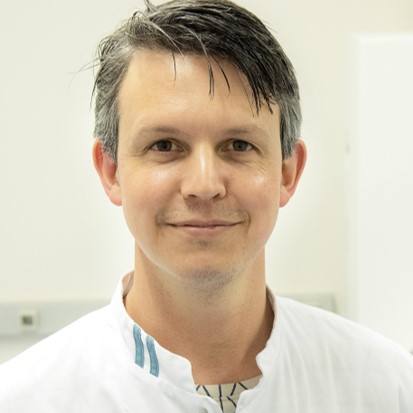
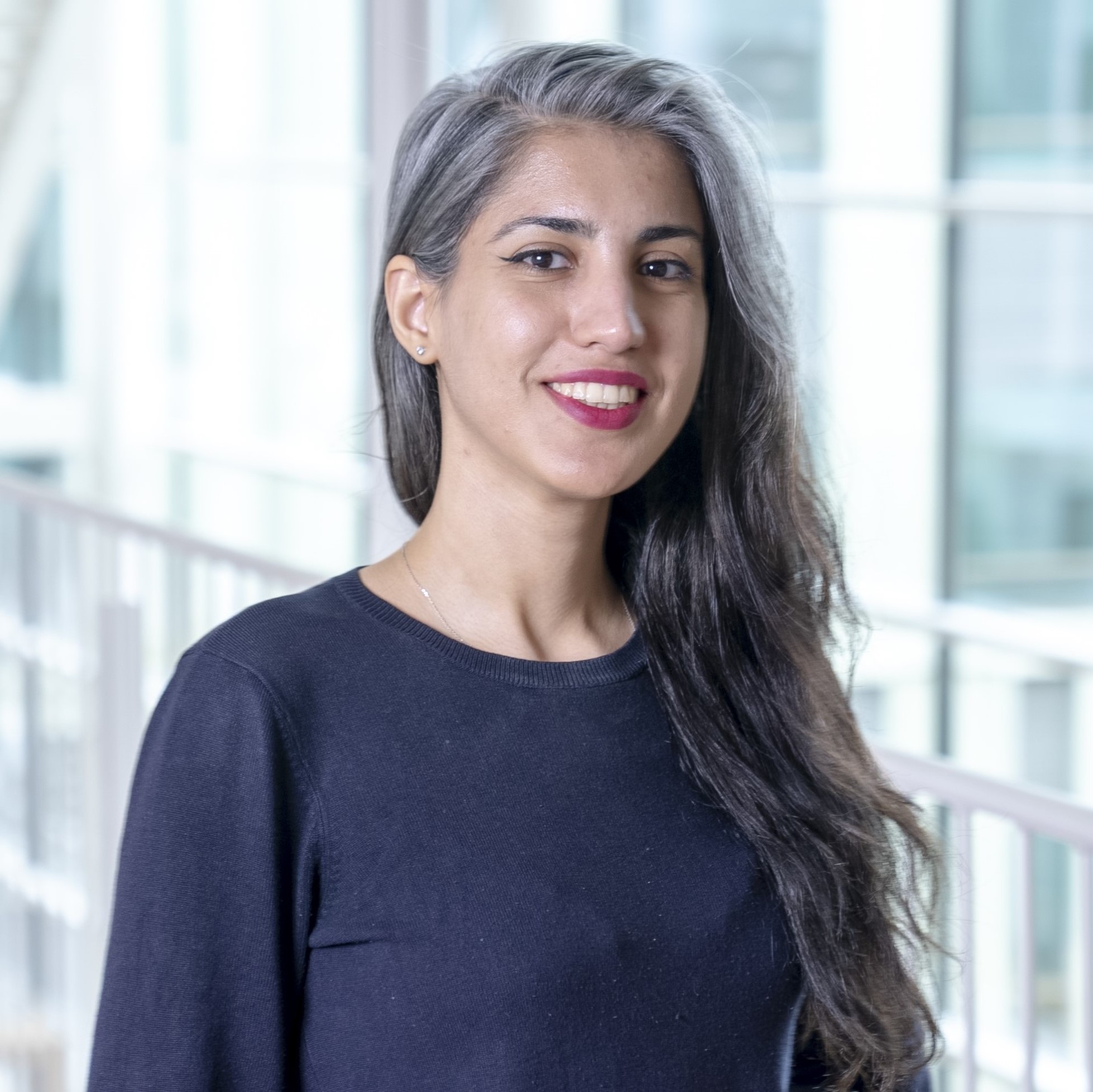
Tianyu Zhang (Opening)

Netherlands Cancer Institute & Radboudumc, the Netherlands

Ritse Mann (Keynote)

Radboudumc, the Netherlands

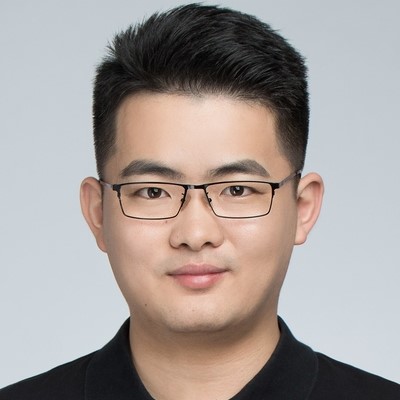
Hao Chen (Keynote)

The Hong Kong University of Science and Technology, China

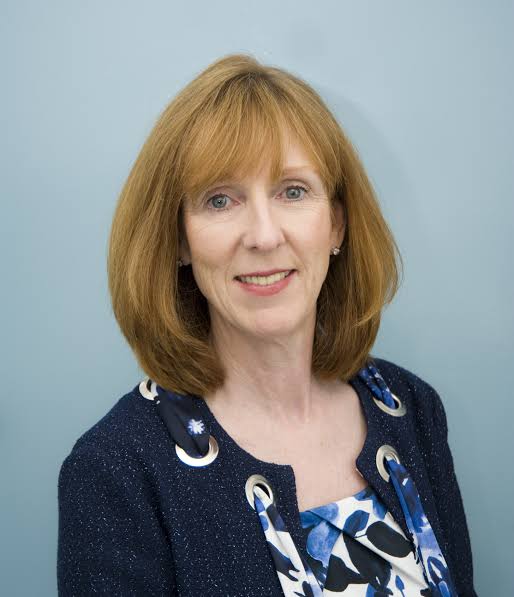
Fiona Gilbert (Keynote)

University of Cambridge, UK

Maciej Mazurowski (Keynote)

Duke University, USA

Join Our Three Associated Challenges at the Workshop

  • BIG-MRI 2026: BIG-MRI Risk Challenge.
  • MAMA-Synth 2026: Synthesizing Virtual Contrast-Enhancement in Breast MRI.
  • UUSIVC 2026: Universal Ultrasound Challenge: Multi-Organ Classification and Segmentation.
  • About Us

    Deep-Brea3th 2026: 3rd Deep Breast Workshop on AI and Imaging for Diagnostic and Treatment Challenges in Breast Care

    The Deep-Breath2026 workstation will provide a discussion forum focused on the topic of AI in breast cancer and aims to promote the development of related research areas, to share insights in academic research and clinical practice among clinicians and AI experts, and explore the opportunities and address potential challenges of AI applications in breast health, thus potentially benefiting doctors and patients. The workshop will publish original papers in all areas related to the AI in breast cancer arena including, but not limited to, the following suggested topics:

  • Breast imaging (mammography, ultrasound, MRI, PET/CT, H&E, etc.)
  • Detection, segmentation and classification
  • Breast cancer screening
  • Histological characteristics
  • Medical image registration
  • Multimodal imaging fusion
  • Image synthesis
  • Image reconstruction
  • Risk assessment and prediction
  • Treatment response
  • Drug selection
  • Lymph node status
  • Molecular subtypes
  • Tumor microenvironment
  • Prediction of cancer recurrence
  • Reader study
  • Pathology
  • Radiology
  • Natural language processing
  • LLMs
  • Federated learning
  • Swarm learning
  • ...
  • Manuscript Preparation and Submission

    Submissions may be in two tracks:

  • Track 1. Full papers: Submissions must be new work. Papers must be submitted electronically in searchable pdf format following the guidelines for authors and LaTeX and MS Word templates available at Lecture Notes in Computer Science (LNCS). Manuscripts can be up to 8-pages (text, figures and tables) plus up to 2 pages of references. The MICCAI Conference review process is double-blind, i.e. the names of the authors, reviewers, and area chairs are not revealed to each other. Papers must thus be properly anonymized before submission. All submissions will be reviewed by at least three experts with experience of relevance. Accepted papers will be assigned for oral or poster presentation based on review scores, and will be published by Springer Nature as a part of the MICCAI Satellite Events joint LNCS proceedings. For accepted papers, the corresponding/senior authors will need to complete and sign a Consent-to-Publish form on behalf of all the authors. Importantly, after review, some papers will be recommended to high-impact partner journals (indexed by SCI).
  • Track 2. Abstracts: Submissions may be new work or recently published/accepted papers. Abstracts are limited to 2500 characters including spaces, and are to be constructed using the following section headings: Purpose; Materials and Methods; Results; Conclusion. It is recommended that a figure to support your work accompany your submission. Accepted abstracts will be assigned for oral or poster presentation based on review scores, and made publicly accessible on this website.
  • Among all the accepted full papers and abstracts, Deep-Breath will give a Best Student Paper award, a Best Workshop Paper award, and a Best Abstract Award, all with electronic certificates.

    Submissions for both tracks should be submitted via OpenReview: https://openreview.net/group?id=MICCAI.org/2026/Workshop/Deep-Brea3th

    Join us to share your academic achievements

    Use AI to change the future with domain experts

    Submit now!

    Important Dates

    • February 1, 2026 Website up
    • April 10, 2026 Open individual websites
    • May 1, 2026 Open for submissions
    • July 1, 2026 Paper Submission Deadline
    • July 31, 2026 Notification of Paper Decision
    • August 7, 2026 Camera-ready Deadline
    • August 15, 2026 Full Program Available
    • September 3, 2026 Workshop proceedings due
    • October 8, 2026 Workshop!
    • Sedna Testimonial Avatar

      "AI will eventually replace radiologists in screen-reading."

      Ritse Mann, Radiologist.

    • Sedna Testimonial Avatar

      "By using swarm learning across international MRI datasets, we are enhancing AI-driven detection of early breast cancer patterns. Our reserach will allow more precise and equitable screening outcomes."

      Jakob Nikolas Kather, physician/scientist.

    • Sedna Testimonial Avatar

      "Tomorrow’s best radiologists won’t just diagnose – they’ll debug algorithms."

      Alexandra Athanasiou, Radiologist.

    • Sedna Testimonial Avatar

      "AI tools have a key role to play in the future of breast screening."

      Fiona Gilbert, Radiologist.

    • Sedna Testimonial Avatar

      "With over 2.3M new breast cancer cases annually, AI will be essential in delivering faster, more accurate, and personalized patient care."

      Firas Khader, AI Scientist.

    • Sedna Testimonial Avatar

      "Every new treatment protocol is a legal opportunity for acquiring data for AI."

      Tao Tan, AI Scientist.

    • Sedna Testimonial Avatar

      "Artificial intelligence will potentially assist doctors and benefit patient care."

      Tianyu Zhang, AI Scientist.

    DEEP-BREATH2026 Committee

    General Chairs

    Tianyu Zhang (Netherlands Cancer Institute / Radboudumc, Amsterdam/Nijmegen, the Netherlands)
    Oliver Lester Saldanha (Else Kroener Fresenius Center for Digital Health, Germany)
    Jakob Nikolas Kather (Else Kroener Fresenius Center for Digital Health, Dresden University of Technology, Germany)
    Tao Tan (Faculty of Applied Sciences, Macao Polytechnic University, Macau, China)
    Ritse Mann (Radboudumc, the Netherlands)

    Organizing Committee

    Tianyu Zhang (Chair)

    Netherlands Cancer Institute & Radboudumc, the Netherlands

    Luyi Han (co-chair)

    Radboudumc, the Netherlands

    Xinglong Liang (co-chair)

    Netherlands Cancer Institute, the Netherlands

    Daniel Truhn

    RWTH Aachen University Hospital, Germany

    Shandong Wu

    University of Pittsburgh, USA

    Maciej Mazurowski

    Duke University, USA

    Jakob Nikolas Kather

    Dresden University of Technology, Germany

    Tao Tan

    Macao Polytechnic University, China

    Ritse Mann (in-chief)

    Radboudumc, the Netherlands

    Challenges

    Coordinator:

    Yaofei Duan

    Radboudumc & Netherlands Cancer Institute, the Netherlands / Macao Polytechnic University, Macau, China
    Chairs:

    Jarek van Dijk

    Radboudumc & Netherlands Cancer Institute, the Netherlands

    Qiang Huang

    Macao Polytechnic University, Macau, China

    Smriti Joshi

    Universitat de Barcelona, Spain

    Richard Osuala

    Universitat de Barcelona, Spain

    Nika Rasoolzadeh

    Radboudumc & Netherlands Cancer Institute, the Netherlands

    Program Committee

    Chairs:

    Chunyao Lu (Co-chair)

    Radboudumc, the Netherlands

    Robert Marti Marly (Co-chair)

    University of Girona, Spain

    Technical Committee

    Chairs:

    Oliver Lester Saldanha (Co-chair)

    Dresden University of Technology, Germany

    Jiefu Zhu (Co-chair)

    Dresden University of Technology, Germany

    Clinical Committee

    Coordinator:

    Antonio Portaluri

    Radboudumc & Netherlands Cancer Institute, the Netherlands

    Advisory Board

    Hongmin Cai (South China University of Technology, China)
    Hao Chen (The Hong Kong University of Science and Technology, China)
    Oliver Diaz (University of Barcelona, Spain)
    Peter Gordebeke (The European Institute for Biomedical Imaging Research (EIBIR), Vienna, Austria)
    Chan-tong Lam (Macao Polytechnic University, Macau, China)
    Karim Lekadir (Universitat de Barcelona, Spain)
    Shuo Li (Case Western Reserve University, Cleveland, USA)
    Xiaoxiao Li (University of British Columbia, Canada)
    Geert Litjens (Radboudumc, Nijmegen, the Netherlands)
    Ulrike Mayerhofer-Schirmer (The European Institute for Biomedical Imaging Research (EIBIR), Vienna, Austria)
    Luping Zhou (The University of Sydney, Australia)

    Contact

    Please contact us for further questions and comments via email at miccai.deepbreath@gmail.com
    Sponsors

    Coming soon...